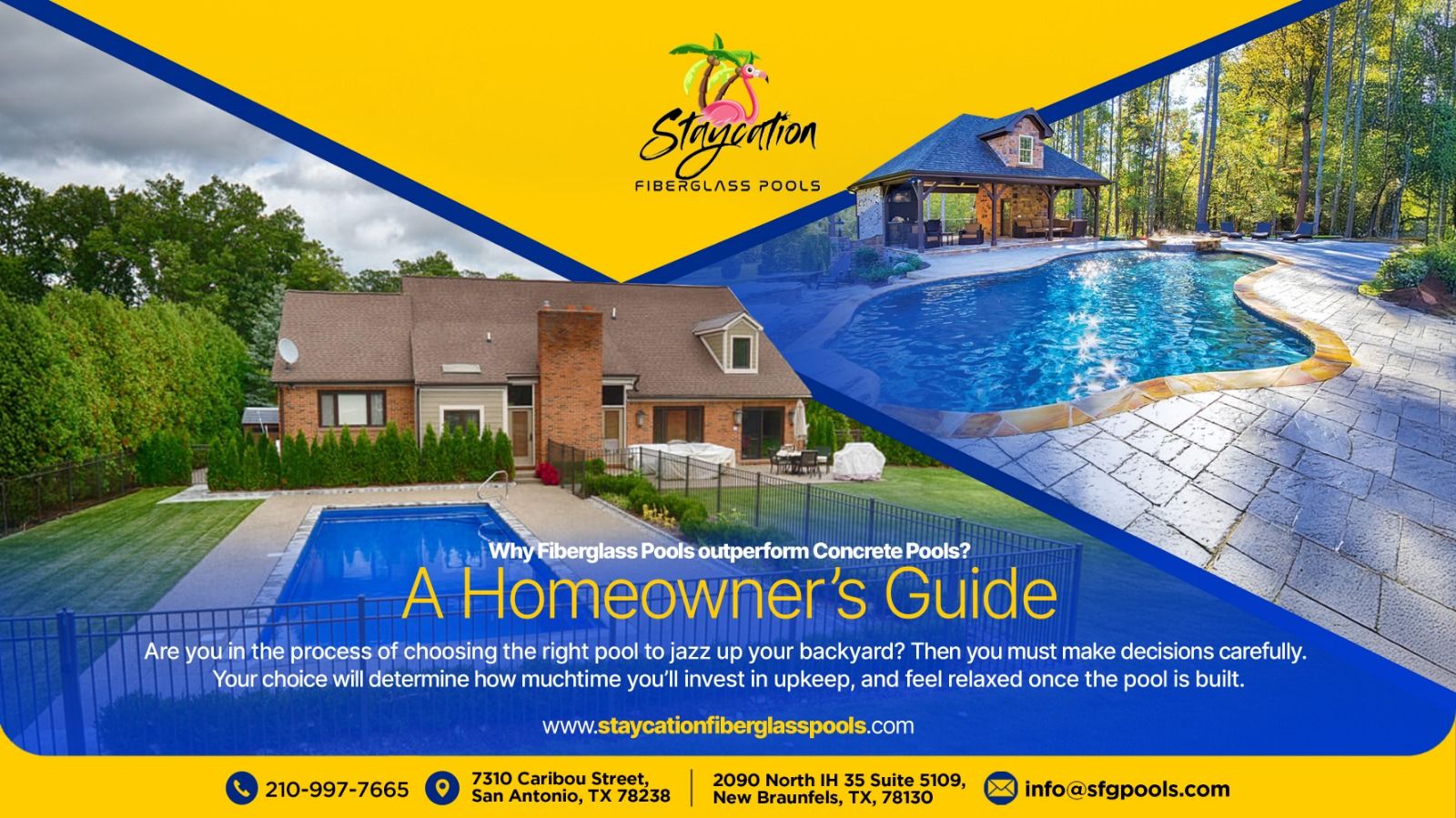
Are you in the process of choosing the right pool to jazz up your backyard? Then you must make decisions carefully. Your choice will determine how much time you’ll invest in upkeep, and how relaxed you actually feel once the pool is built.
Most homeowners across Texas want a pool that looks great, holds up in the long run, and doesn’t turn into a constant maintenance project.
Swimming pool builders in New Braunfels are often asked one question: Are fiberglass pools really better than concrete pools, or is it just marketing talk? It’s a fair question, and one that deserves a clear, honest answer.
In this article, we’ll break down the real differences between fiberglass and concrete pools based on hands-on experience. We’ll cover what truly matters once the excitement of building a pool settles in.
What’s the Core Difference Between Fiberglass and Concrete Pools?
Before weighing the pros and cons, understand what truly sets these two pool types apart. While they may look similar once finished, the way they’re built and how that process plays out on your property can be very different. Reliable swimming pool contractors state that this difference often shapes your entire ownership experience.
Fiberglass Pools Construction Method
Fiberglass pools are crafted in a controlled factory setting. The shell is molded, cured, and finished before it ever reaches your backyard. Once delivered, the pool is carefully set into an excavated site and connected to the plumbing and filtration systems.
As most of the work happens off-site, this streamlined process reduces unexpected delays, minimizes construction errors, and keeps installation far more predictable.
Concrete Pool Construction Process
Concrete pools are built using gunite or shotcrete and are created entirely on-site. The process starts with a steel rebar framework, followed by layers of sprayed concrete. After curing, the surface is finished with plaster, pebble, or tile.
This approach leaves room for greater customization, but it also introduces more variables, longer timelines, and a higher chance of construction-related challenges along the way.
Fiberglass Pools vs. Concrete Pools: A Side-by-Side Comparison
| Feature | Fiberglass Pools | Concrete Pools |
| Installation Timeline | Typically installed within 2–4 weeks, with fewer weather-related delays | Can take 3–6 months due to on-site construction and curing time |
| Ongoing Maintenance | Low-maintenance, often around 30 minutes per week | High-maintenance, requiring frequent brushing and cleaning |
| Surface Finish | Smooth and non-abrasive, comfortable for swimmers | Rough and porous, which can feel harsh over time |
| Chemical Usage | Lower chemical demand due to a non-porous surface | Higher chemical usage because of the alkaline, porous finish |
| Resurfacing Needs | Rarely needed over the pool’s lifespan | Typically required every 7–15 years |
| Design Flexibility | Limited to pre-engineered, factory-molded designs | Virtually unlimited customization options |
Do Fiberglass Pools Install Faster and Last Longer?
When comparing pool types, speed and durability often go hand in hand. It’s not just about how quickly the pool gets built; it’s about how well that pool holds up.
Fiberglass Pools: Built Fast, Designed to Adapt
Most fiberglass pools are installed within just a few weeks. The shell arrives pre-manufactured, so there are fewer opportunities for delays. For homeowners, that means:
- Minimal disruption to the yard and surrounding property
- Lower labor costs and fewer unexpected expenses
- Faster access to a fully functional pool
Beyond speed, fiberglass brings the advantage of flexibility. The material has a slight give, allowing it to move with soil shifts. This adaptability helps reduce the risk of structural cracking. So, if you are looking for the best fiberglass pools in New Braunfels, think beyond initial appearance and focus on long-term performance.
Concrete Pools: Built to Last, but at a Cost
Concrete pools typically take several months to complete. Weather delays, curing time, and multiple finishing stages can extend the timeline significantly. For some homeowners, that prolonged construction period can feel disruptive and expensive.
While concrete is known for its strength, its rigidity can become a drawback over time. As the ground expands and contracts with temperature changes, cracks may form, often leading to resurfacing or structural repairs down the line.
What Does Daily Pool Ownership Really Feel Like?
Government pool-safety guidance (CDC’s Healthy Swimming program) emphasizes maintaining proper chemical balance and surface sanitation to prevent germ spread. This is where the difference between fiberglass and concrete pools becomes most noticeable. Every day upkeep and swimmer comfort play a huge role in how much you actually enjoy your pool.
Fiberglass Pools: Low Effort, High Comfort
Fiberglass pool surfaces are smooth and non-porous, which makes ongoing care refreshingly simple. As algae struggles to cling to the surface, routine maintenance tends to be quicker and less labor-intensive. Homeowners often notice:
- Less algae buildup and fewer cleaning sessions
- Lower chemical use throughout the season
- Faster, easier weekly upkeep
Many families appreciate how manageable pool care becomes when following basic fiberglass pool maintenance tips recommended by professionals.
Comfort is another big plus. The smooth gel-coat finish feels gentle underfoot and on skin, making this option especially appealing for households with kids or frequent swimmers.
Concrete Pools: Custom Look, Higher Commitment
Concrete pools, on the other hand, require more hands-on maintenance. Their porous surfaces make it easier for algae to grow, which often leads to:
- More frequent brushing and cleaning
- Higher chemical usage to maintain water balance
- Periodic resurfacing every 10–15 years
While concrete finishes offer visual variety, the textured surface can feel rough over time. For swimmers who spend hours in the pool, that texture may become uncomfortable, particularly for children or anyone with sensitive skin.
In the end, your choice comes down to lifestyle. You must always go for the options that suit you and your family the best.
Is Customization a Dealbreaker?
Customization often sounds like the deciding factor when choosing a pool. However, it’s not always as critical as it seems. The real question is whether unlimited design freedom actually improves how you’ll use and enjoy your pool day to day.
Concrete Pools: Total Design Freedom
Concrete pools offer near-complete flexibility in shape, depth, and layout. If you’re envisioning a truly one-of-a-kind design with custom contours or unconventional dimensions, concrete can make that happen. This level of freedom is often considered its biggest advantage.
Fiberglass Pools: Smart Designs That Work
Modern fiberglass pools may come in pre-designed molds, but today’s options are far from limited. Homeowners can choose from a wide range of sizes, shapes, and built-in features like tanning ledges, integrated steps, and seating areas. For many families, these thoughtfully engineered designs meet practical needs without unnecessary complexity.
In reality, most homeowners find that smart, well-designed fiberglass options deliver everything they want.
Which Pool Is More Cost-Effective Long-Term?
When comparing pool options, it’s easy to focus on the upfront price tag, but the real cost of a pool shows up over time. Maintenance, repairs, and chemical use can quietly add up over the years.
Fiberglass Pools: Predictable Long-Term Value
Fiberglass pools often come with a higher initial investment, but their long-term costs are typically easier to manage. The non-porous surface helps maintain water balance more efficiently.
Lower annual chemical usage and the need for minimal repair can help you save a lot of money over time.
Concrete Pools: Expenses That Increase with Age
Concrete pools may seem budget-friendly at first, but their porous and rigid structure often leads to rising costs over time.
Periodic resurfacing, increased chemical demand, and other such maintenance needs can end up making you spend more over the years. For homeowners planning to enjoy their pool for many years, these ongoing costs can significantly impact the overall value of a concrete pool investment.
What Do Local Experts Recommend?
Many experienced swimming pool builders tend to recommend fiberglass for clients who value durability, ease of care, and long-term savings. It’s not about trends, it’s about what performs best in real conditions.
If you’re comparing builders, it’s also worth reviewing resources like “Key Questions to Ask Swimming Pool Builders in New Braunfels” to make sure you’re choosing a partner who understands both materials and local conditions.
Ready To Make A Smart Pool Investment
When weighing fiberglass pools against concrete pools, the difference often comes down to lifestyle and long-term value. Fiberglass pools offer a balance of beauty, durability, and ease that aligns well with how people actually use their pools today.
You’ll likely hear most experts echo the same advice again and again. If you’re exploring options and want honest guidance, you can reach out to Staycation Fiberglass Pools. We thoroughly understand Texas soil, climate challenges, and what it takes to build a pool that lasts.
Contact us to learn more.